Designing Brand New Product, from Search to Checkout (Vacation Rentals)
Background
As the world’s largest travel software business, arrivia sometimes acquires new businesses or partners with existing businesses. One of the businesses we partnered with is Redweek, a company which allows timeshare owners to list and sell their timeshare weeks, and allows non-owners to buy weeks. These inventories are generally exclusive to people within the site. This acquisition adds value to arrivia’s membership offerings, and I was asked to create the user interface for our clients users, the entire product, start to finish, which is implemented in phases.
Endorsement of My Product
“They loved it. They thought it was the greatest thing since sliced bread. I’ve been in the industry over 25 years and I mean this is definitely the best benefit that’s ever been in the industry … [The Exclusive Access badge] sells itself, so having that functionality on there is huge. The functionality [of this Vacation Rentals product] is perfect, and it shows well from a sales standpoint.”
“Laurel, congratulations on your design, and I’ll also pass it on to the [development] team because I I like them to hear the feedback that you, you know that our our agents really did like what what we’ve implemented and designed.”
User Journeys
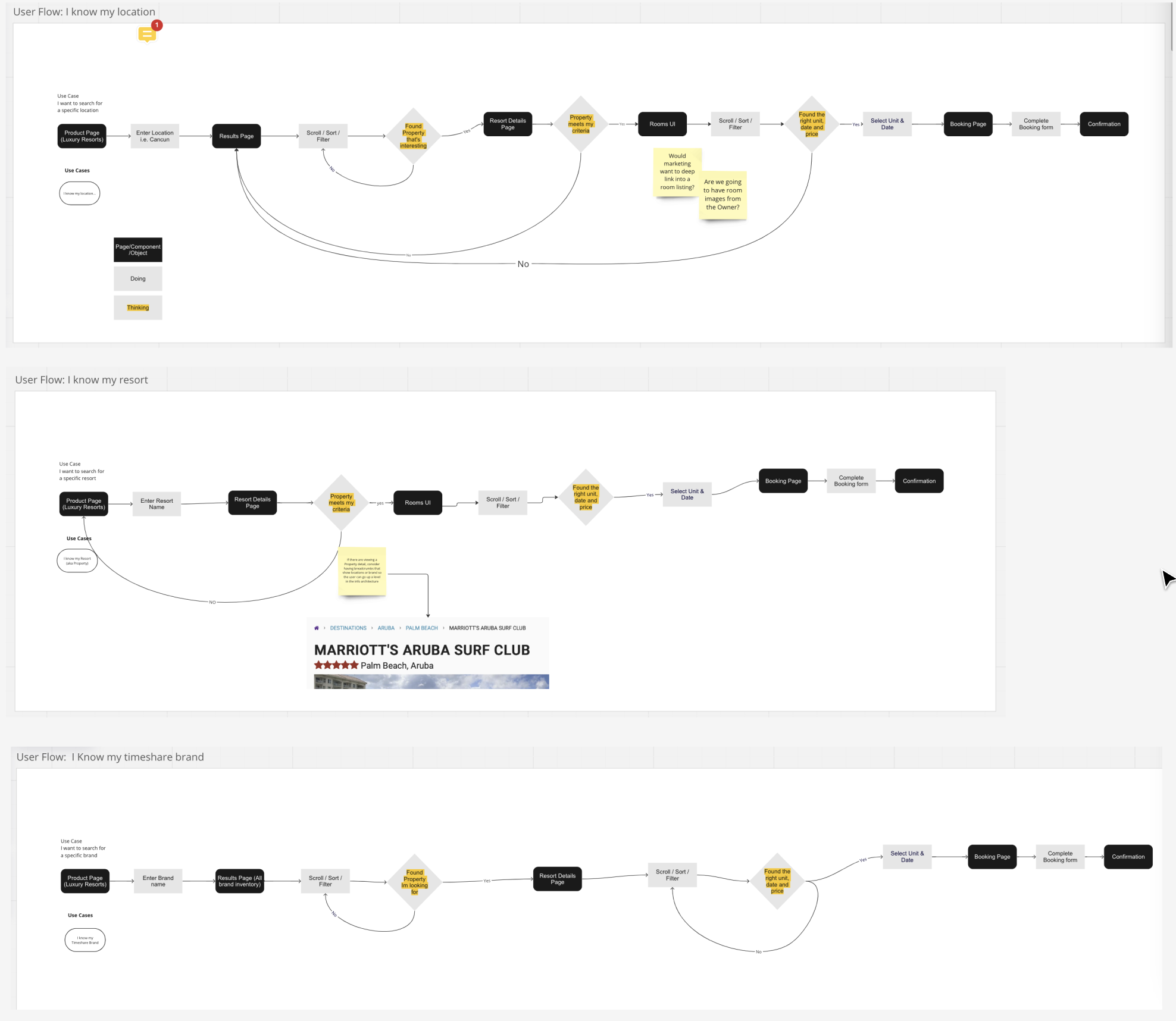
There are multiple ways that a user can enter the Redweek flow from search — by Region, Country, Resort Chain, or Specific Resort.
Redweek’s Site

Competitive Analysis
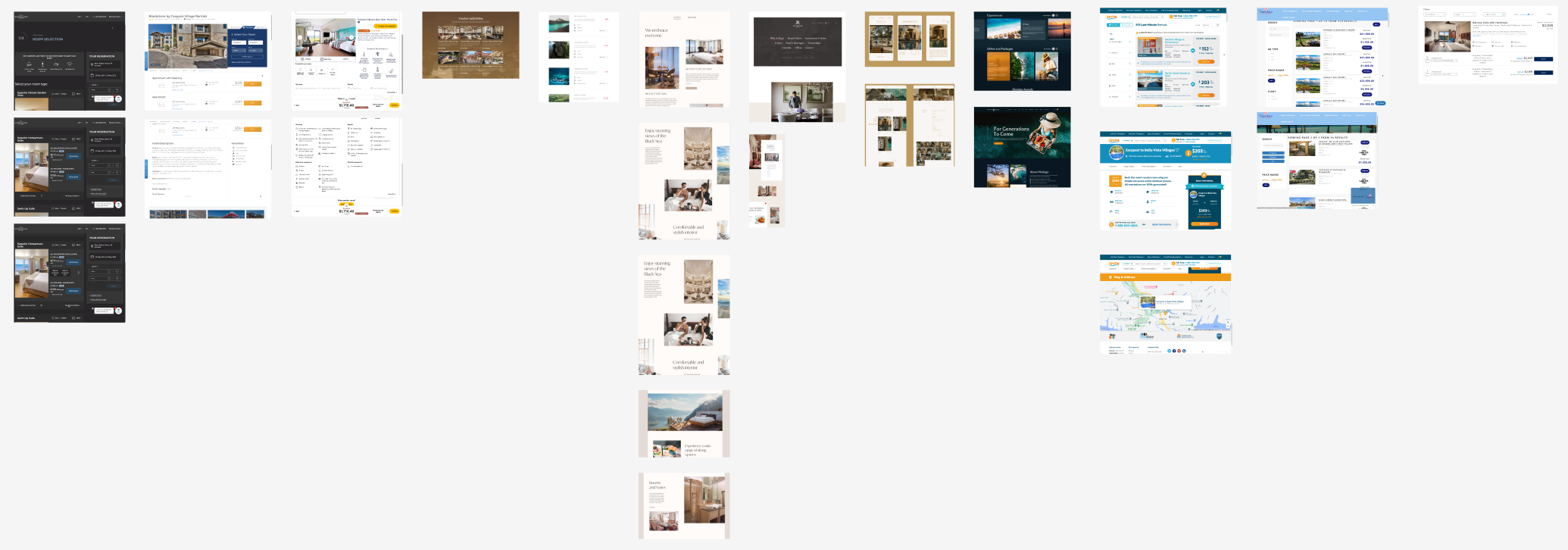
I looked at all of our current products, as well as relevant Resort competitors to get an idea of what is being done today in the market.
Wireframes
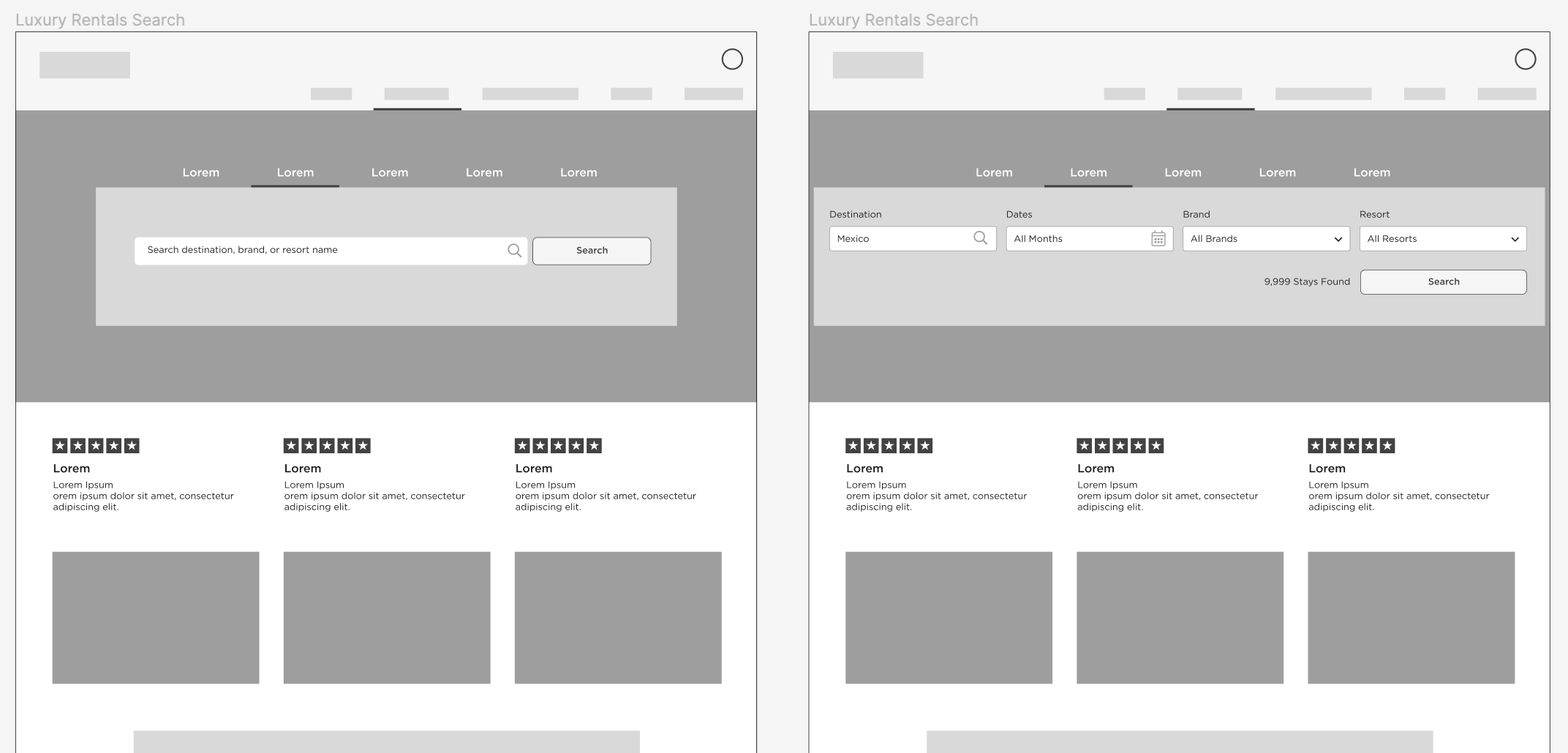
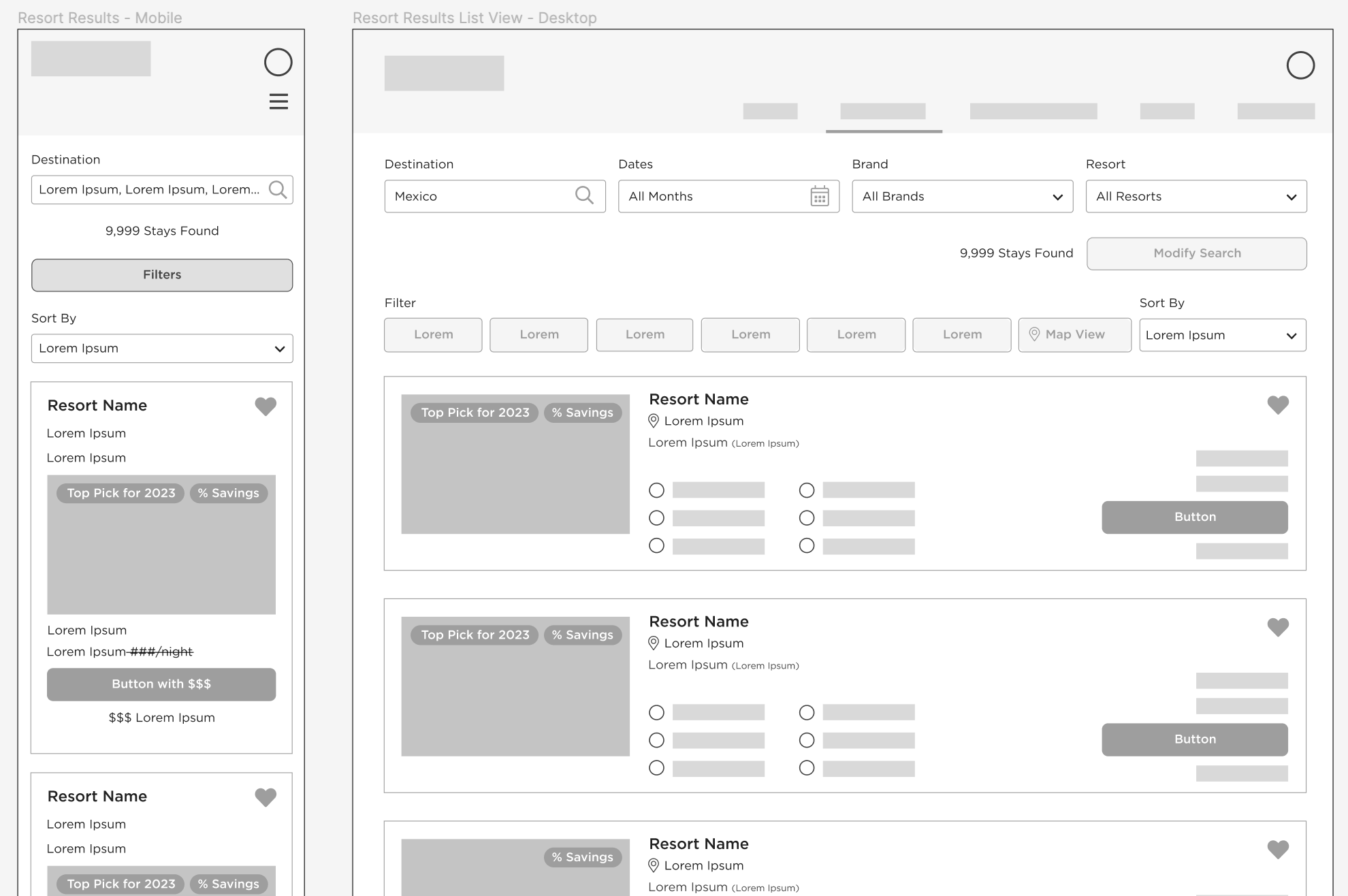
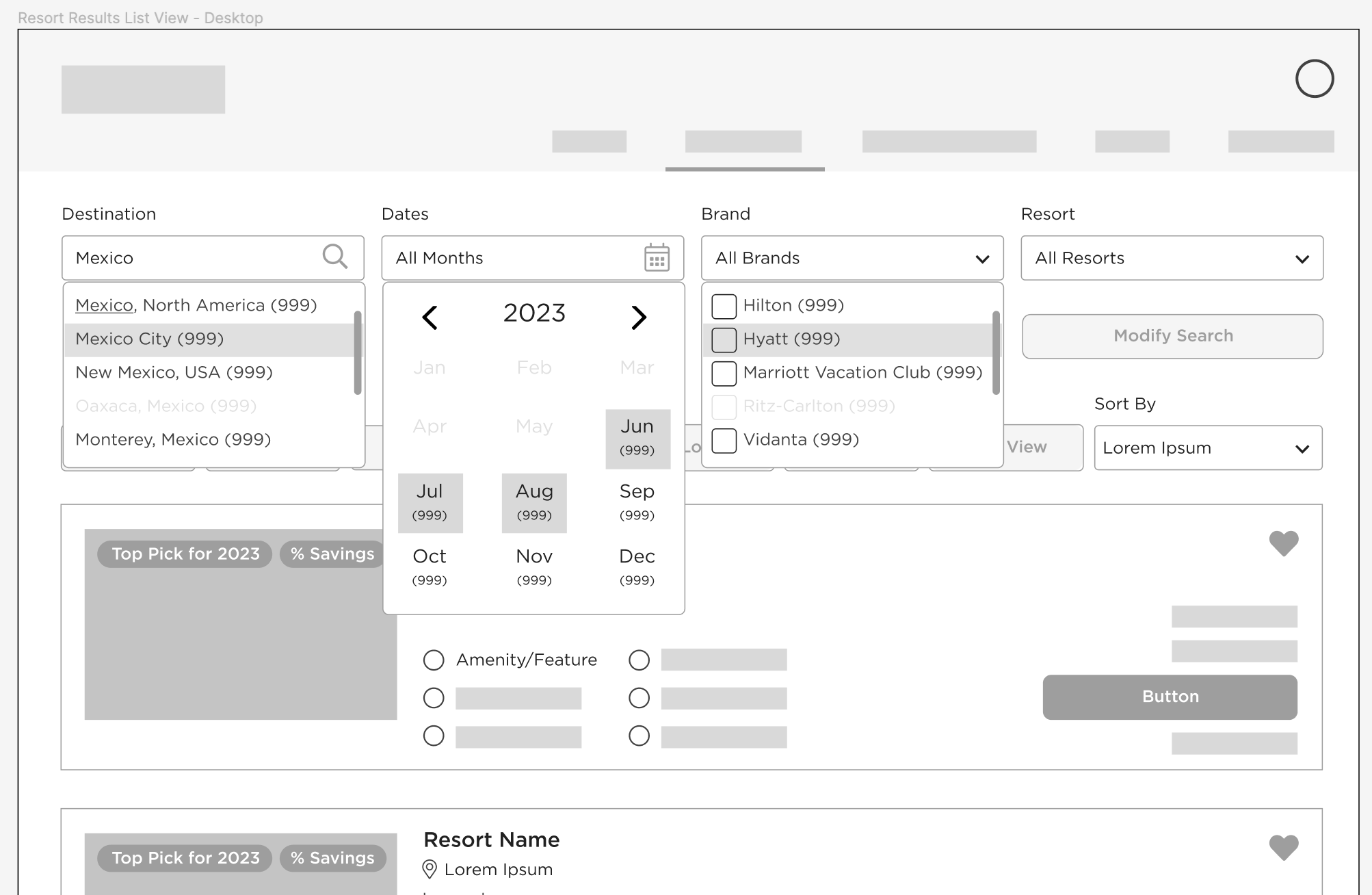
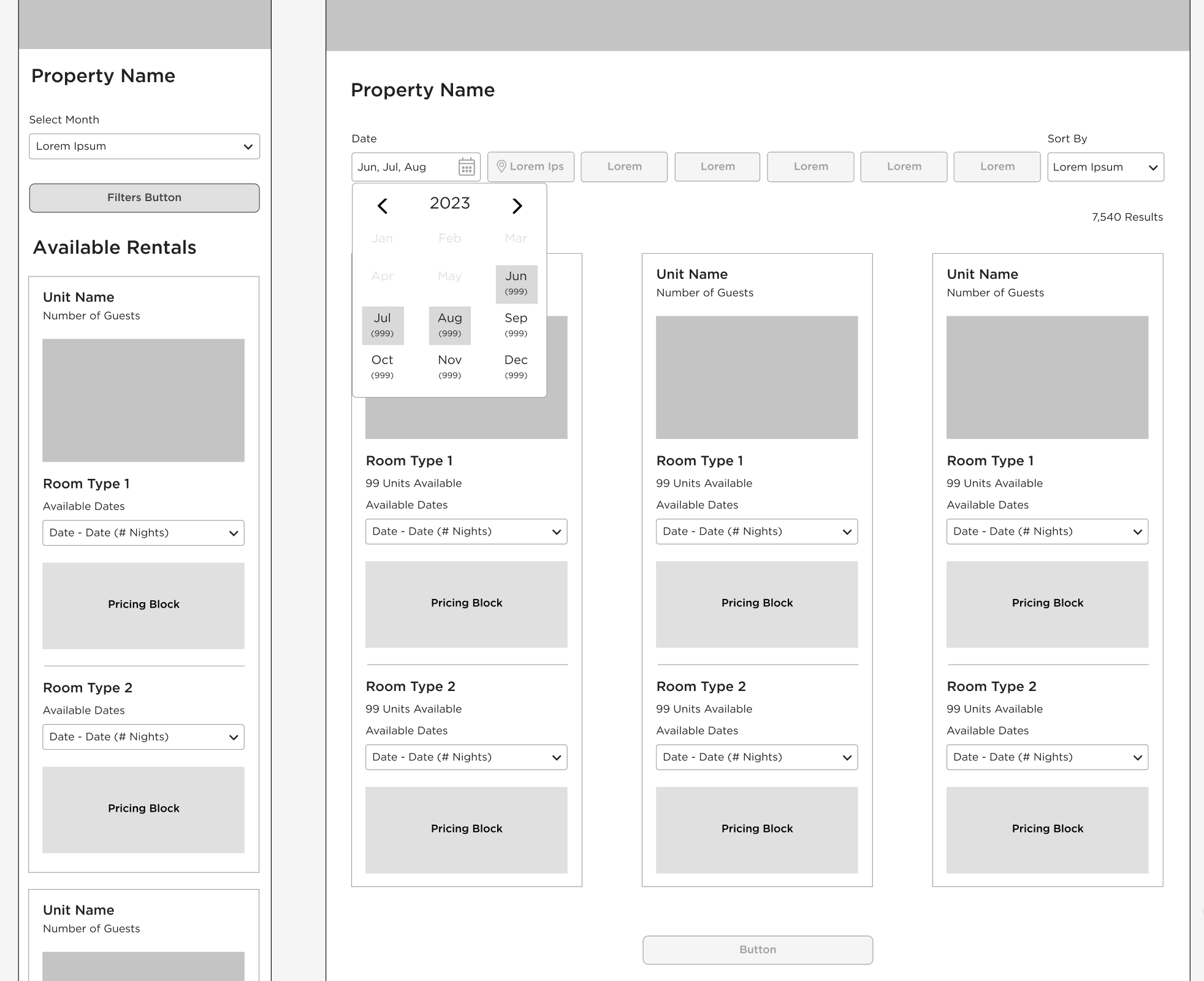
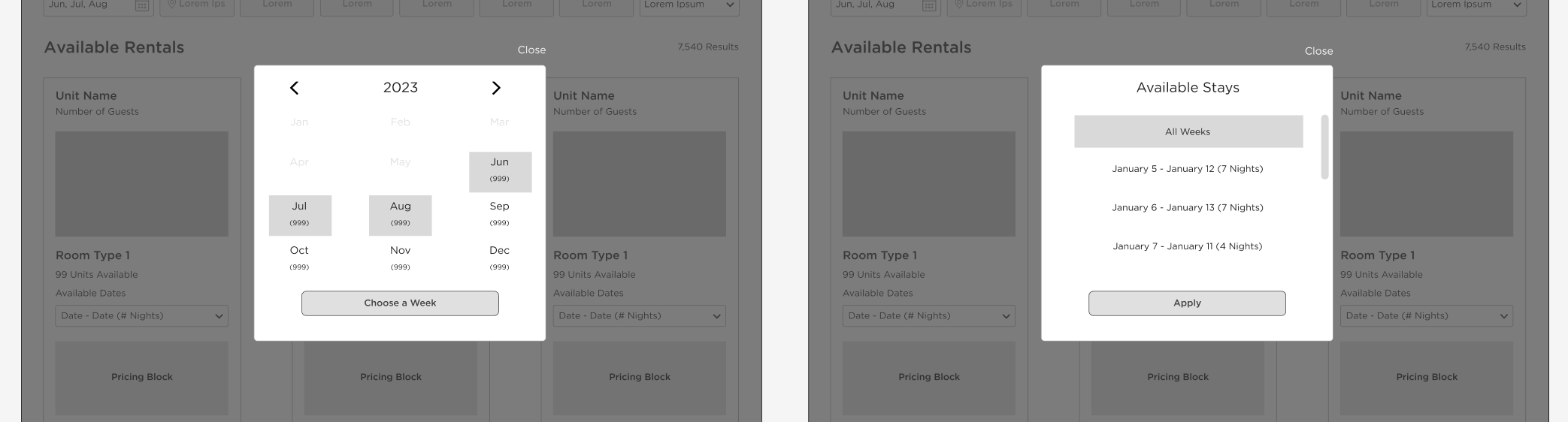
Next I made wireframes based on the needs of the product, and the products we are trying to creat consistency with (Hotel and Resort).
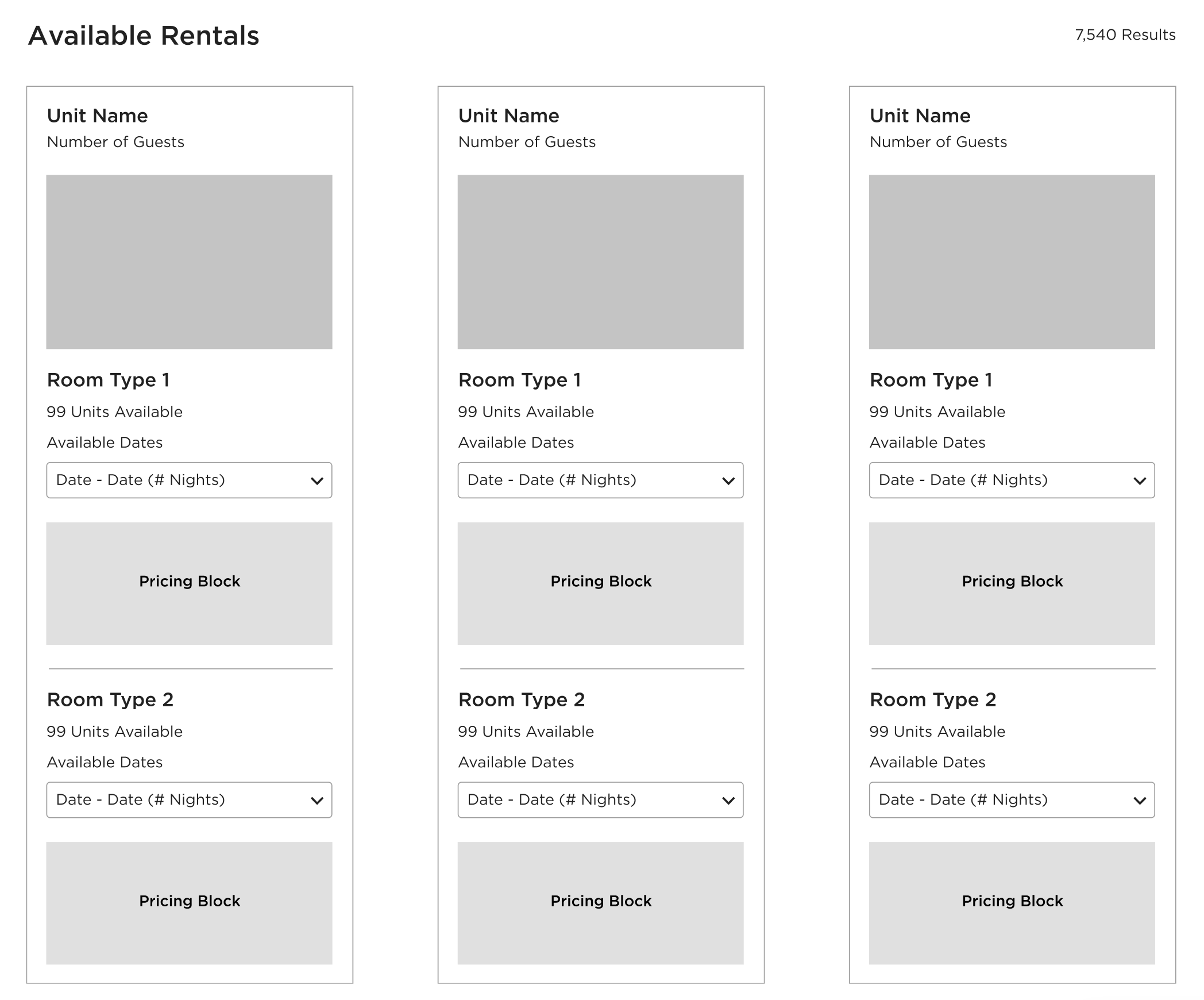
Revisions
One of the more significant changes was to the listings page, where we determined a vertical layout was necessary, and the type of grouping I’d come up with worked better for resorts than timeshare listings, which are unique and individual.
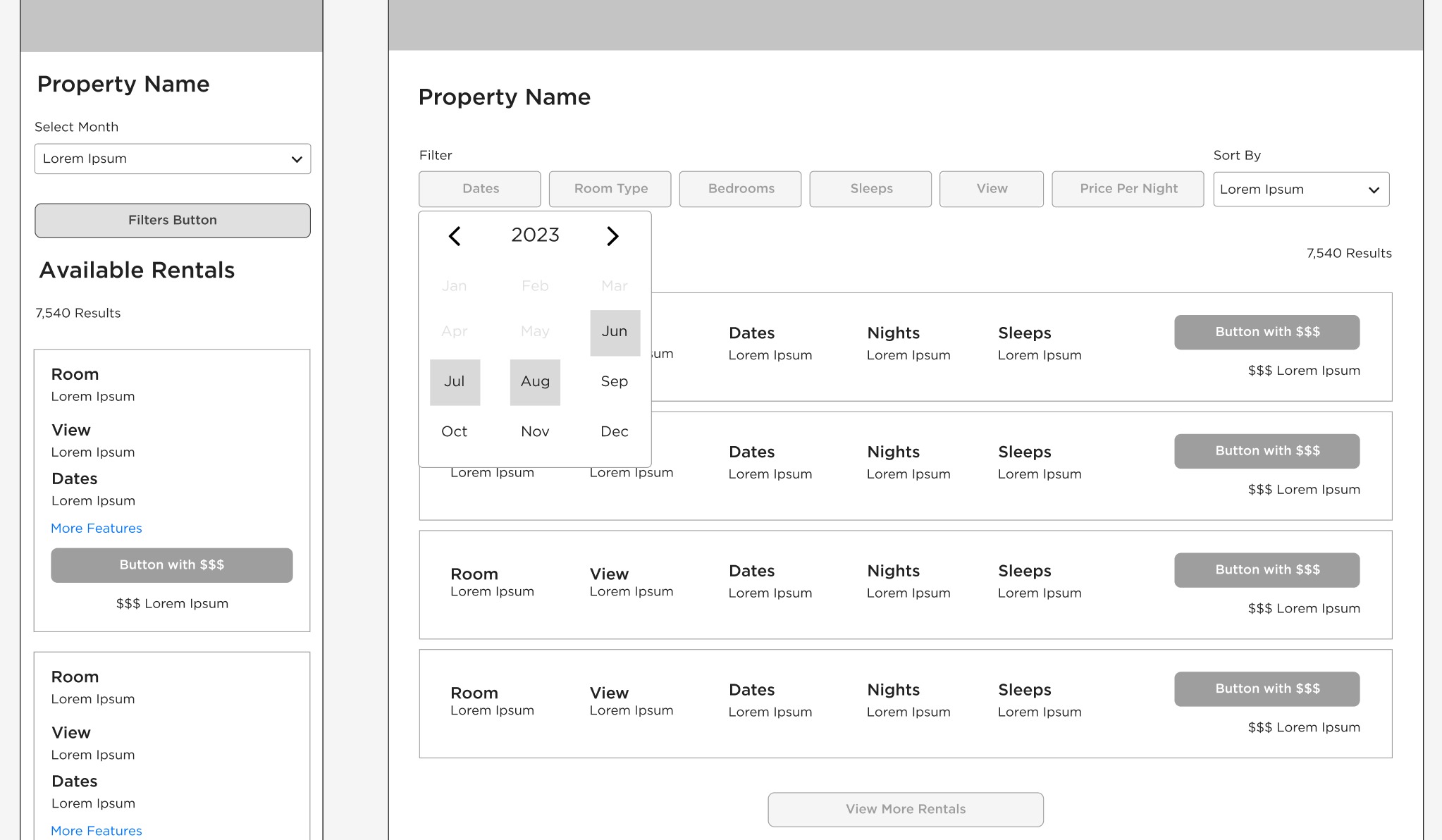
First Phase of High Fidelity
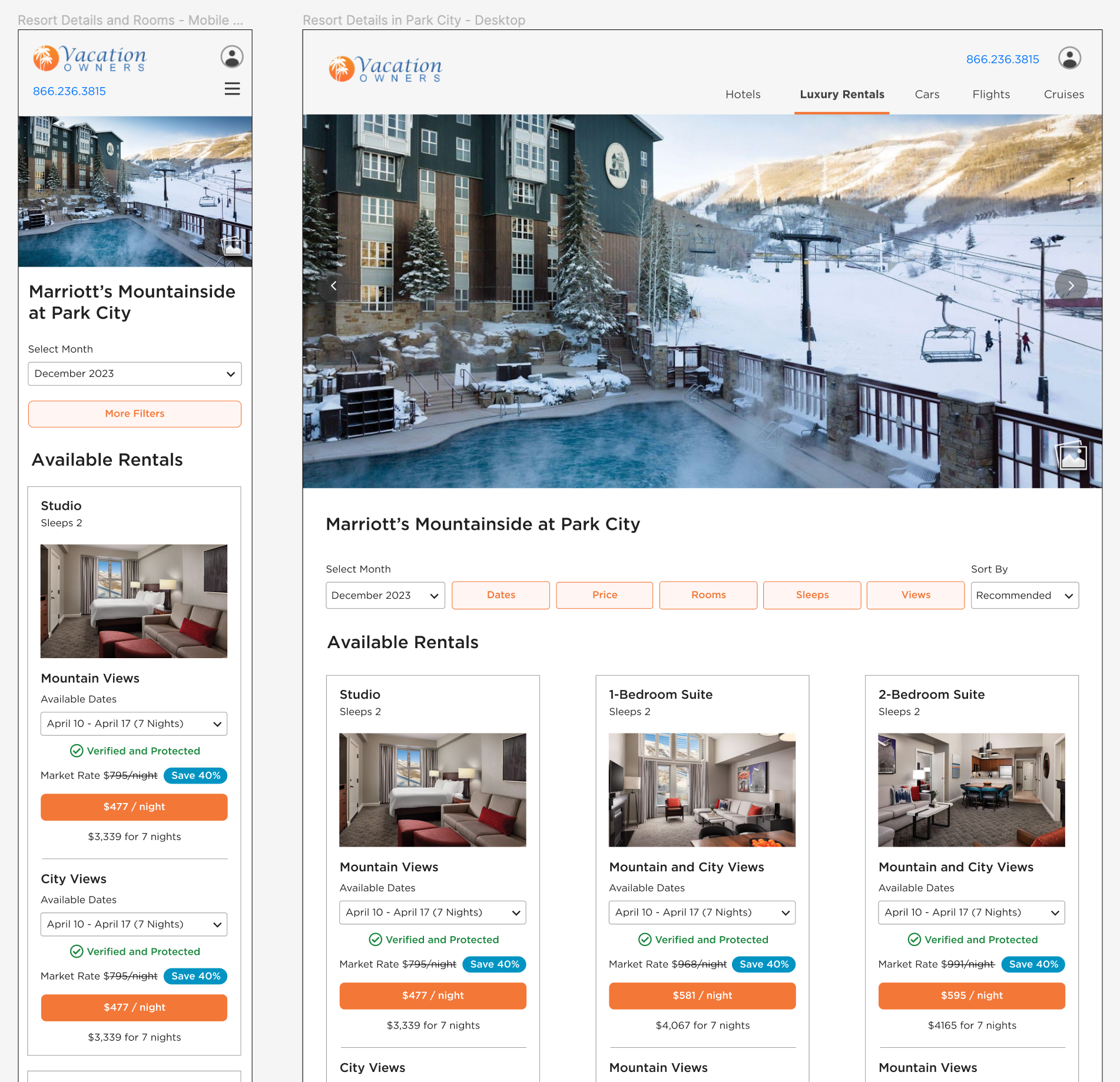
Phase 2 of Revisions
Continuous revisions included sticking with an omnisearch, adding in marketing blocks, updating the content and organization on results blocks, and badging.
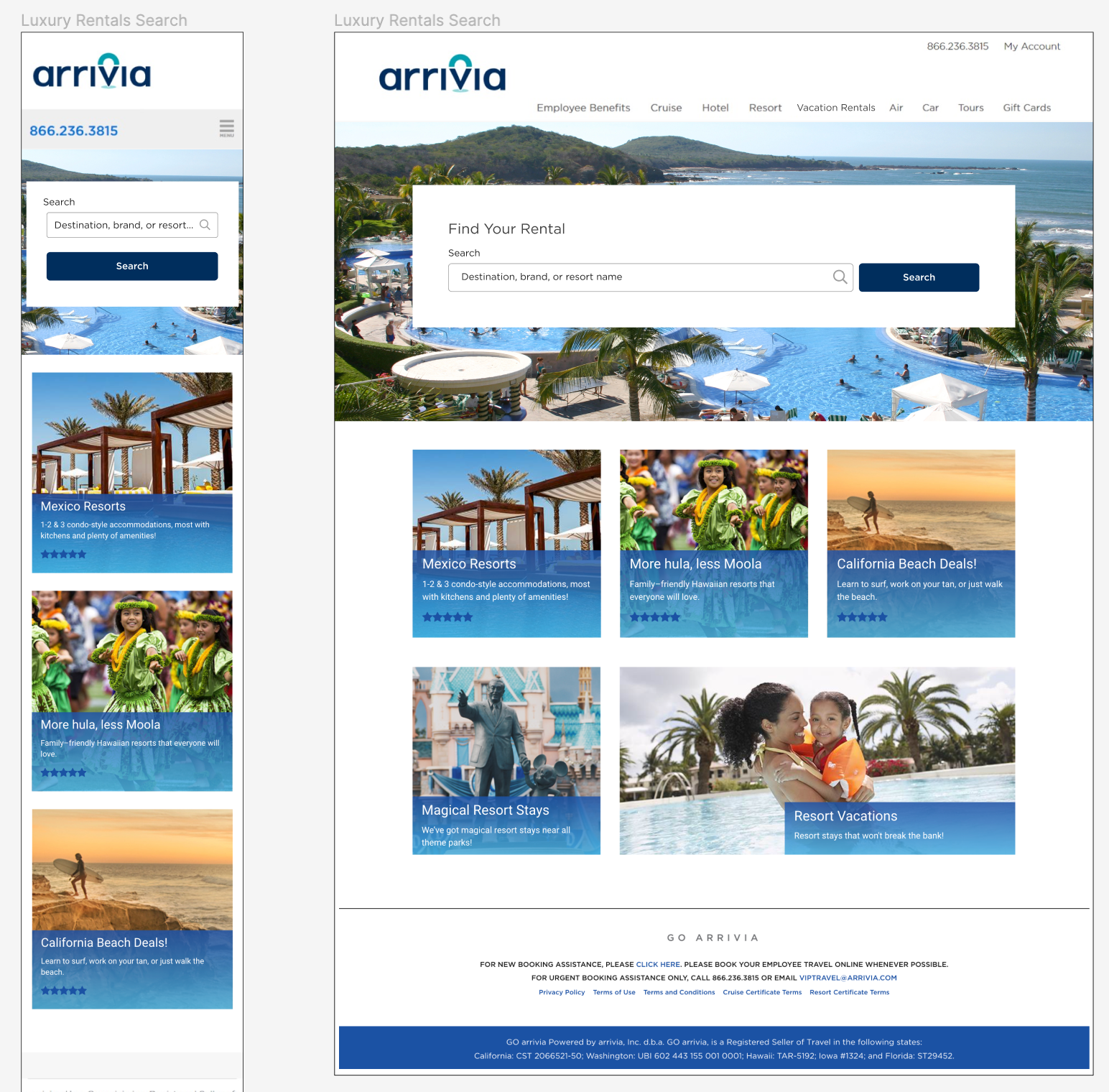
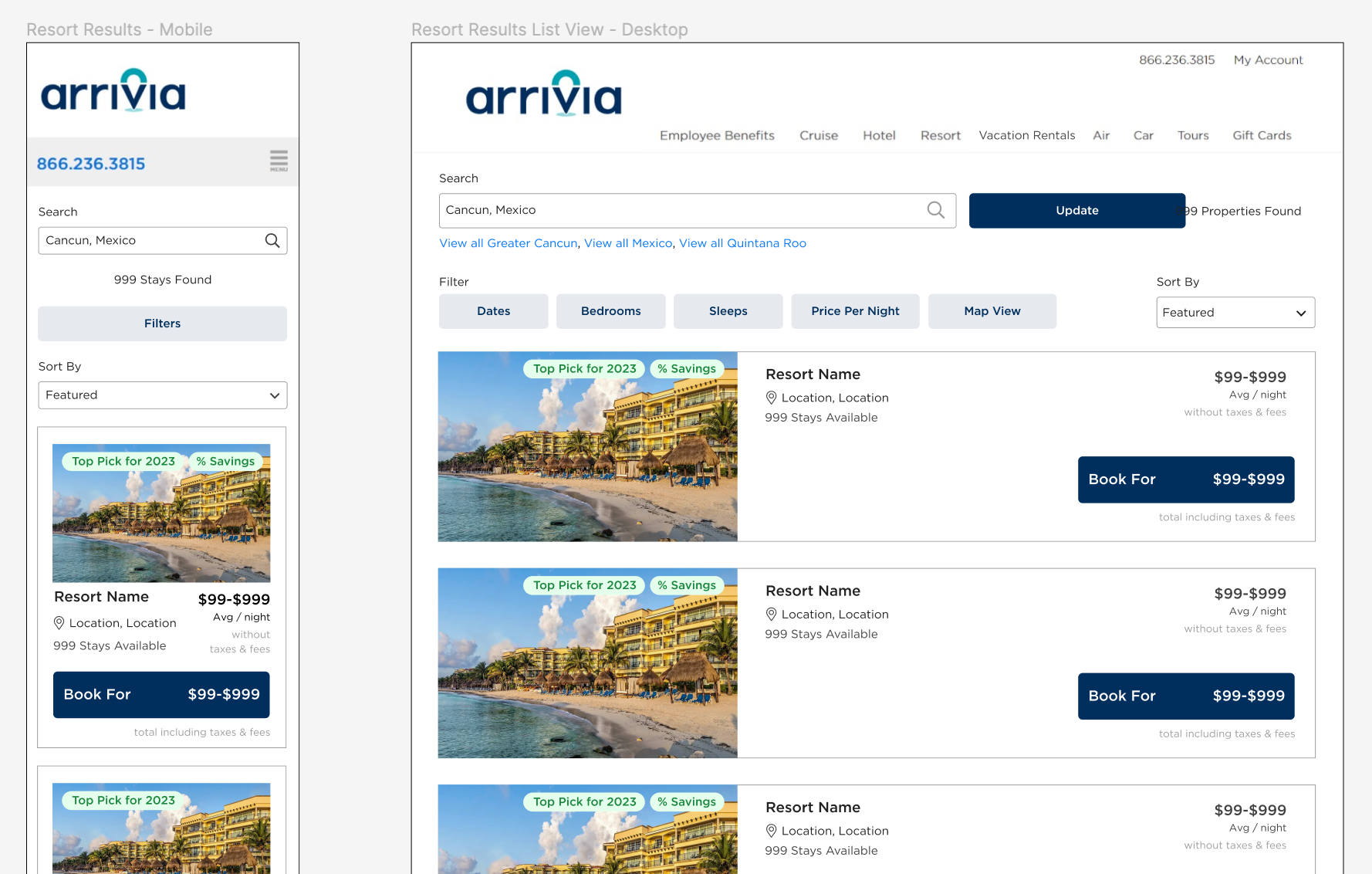
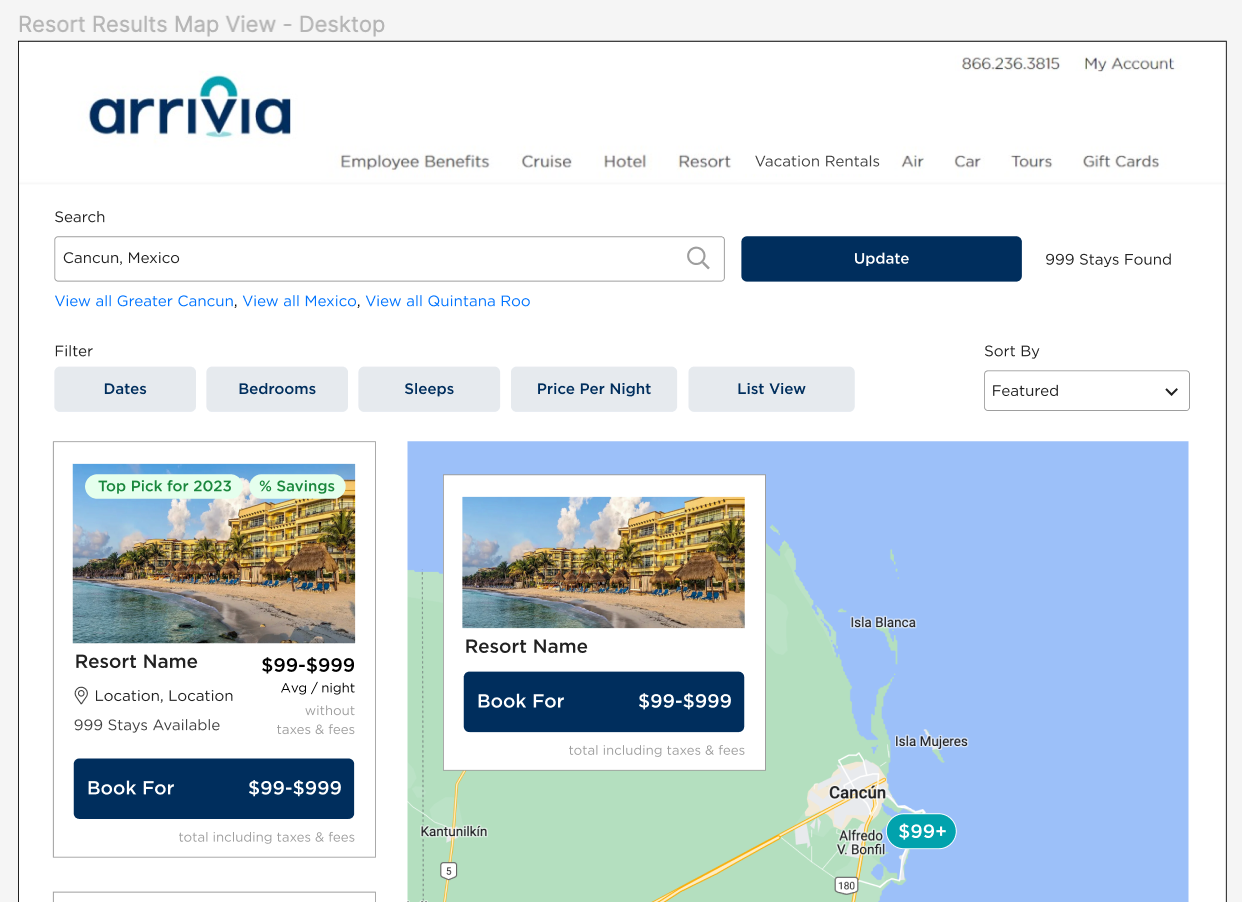
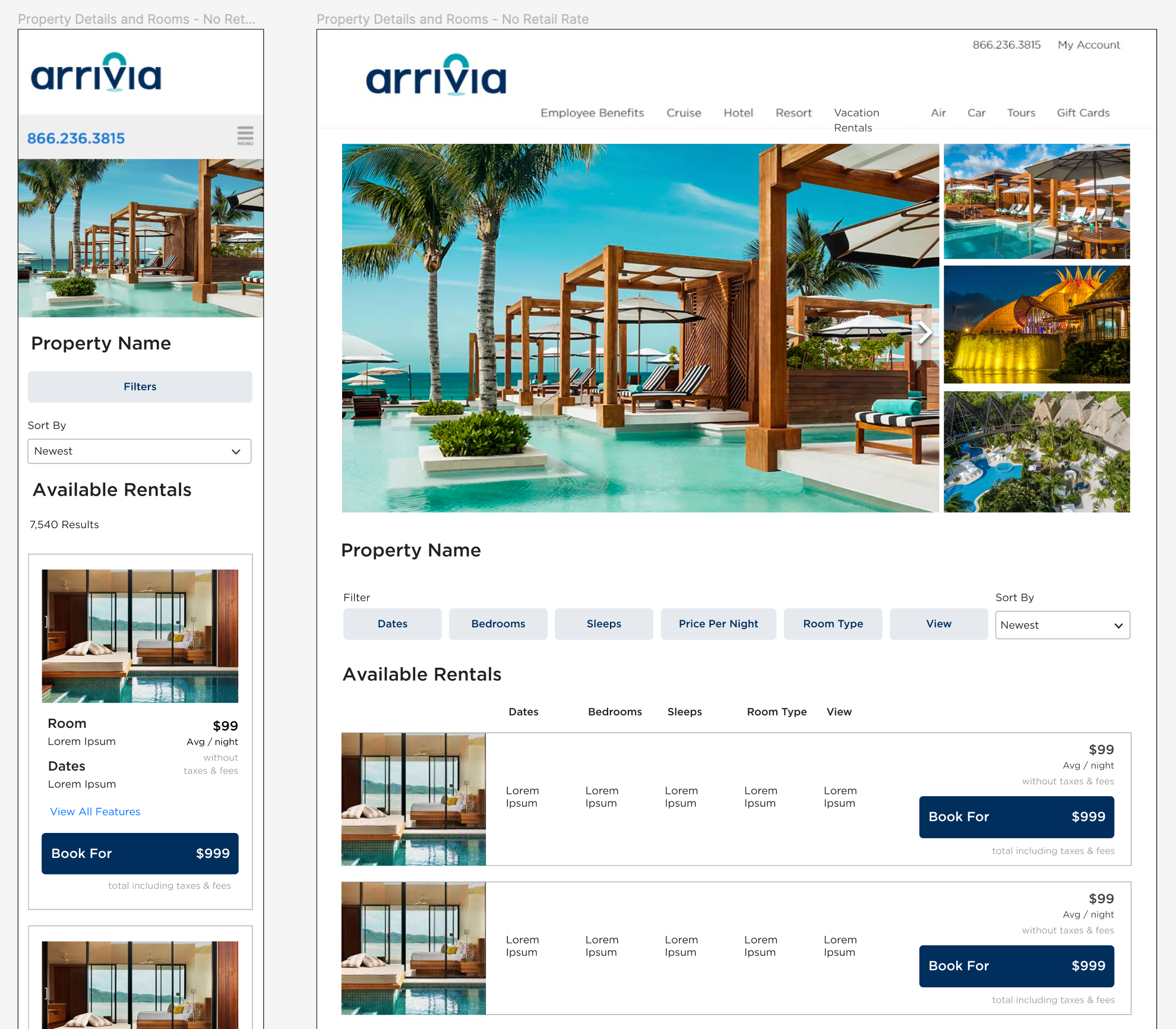
Stakeholders Presentation (Including CEO)
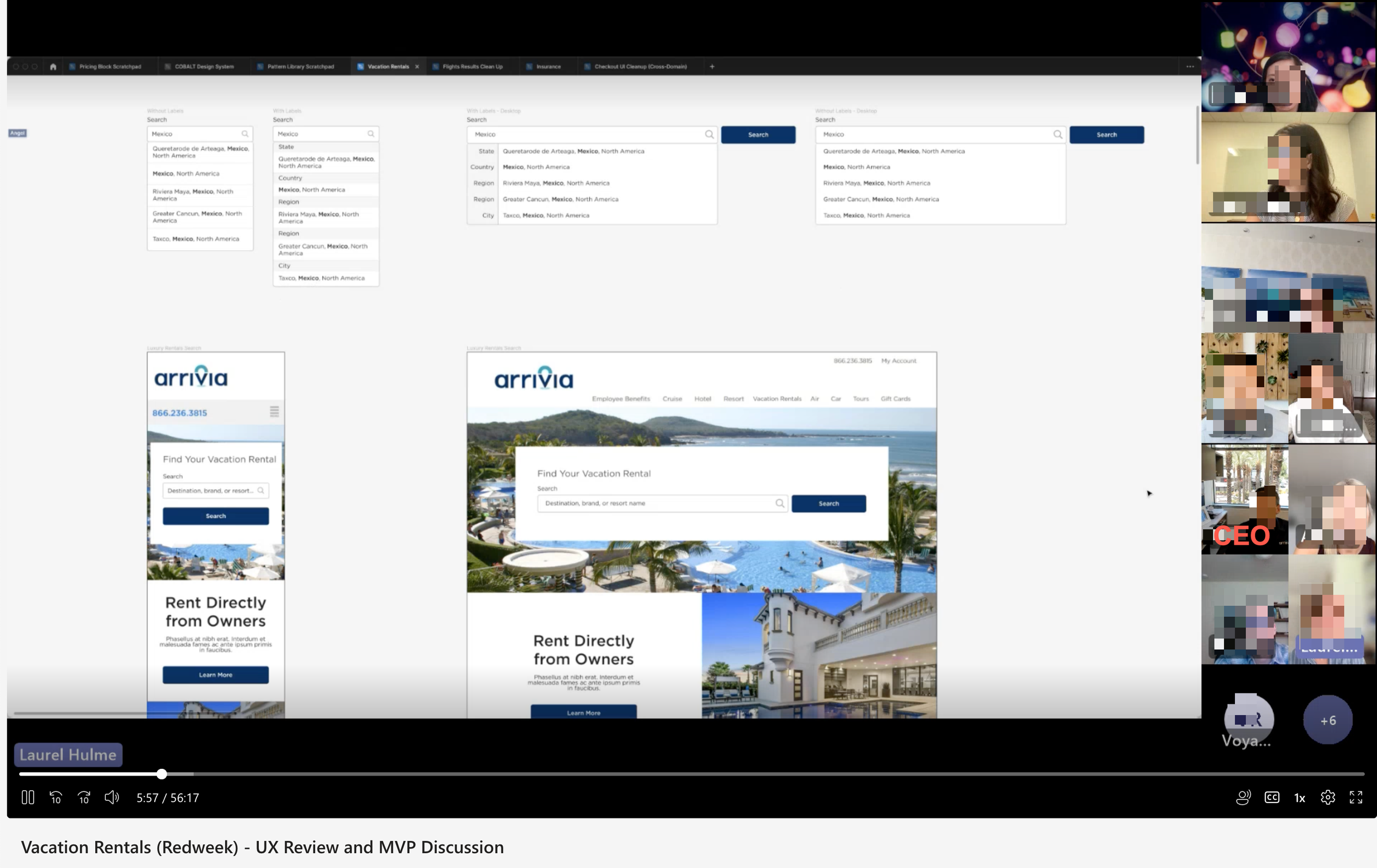
At this point, I presented the revised designs to stakeholders, who were pleased with the product and ready to move on to the next phase.
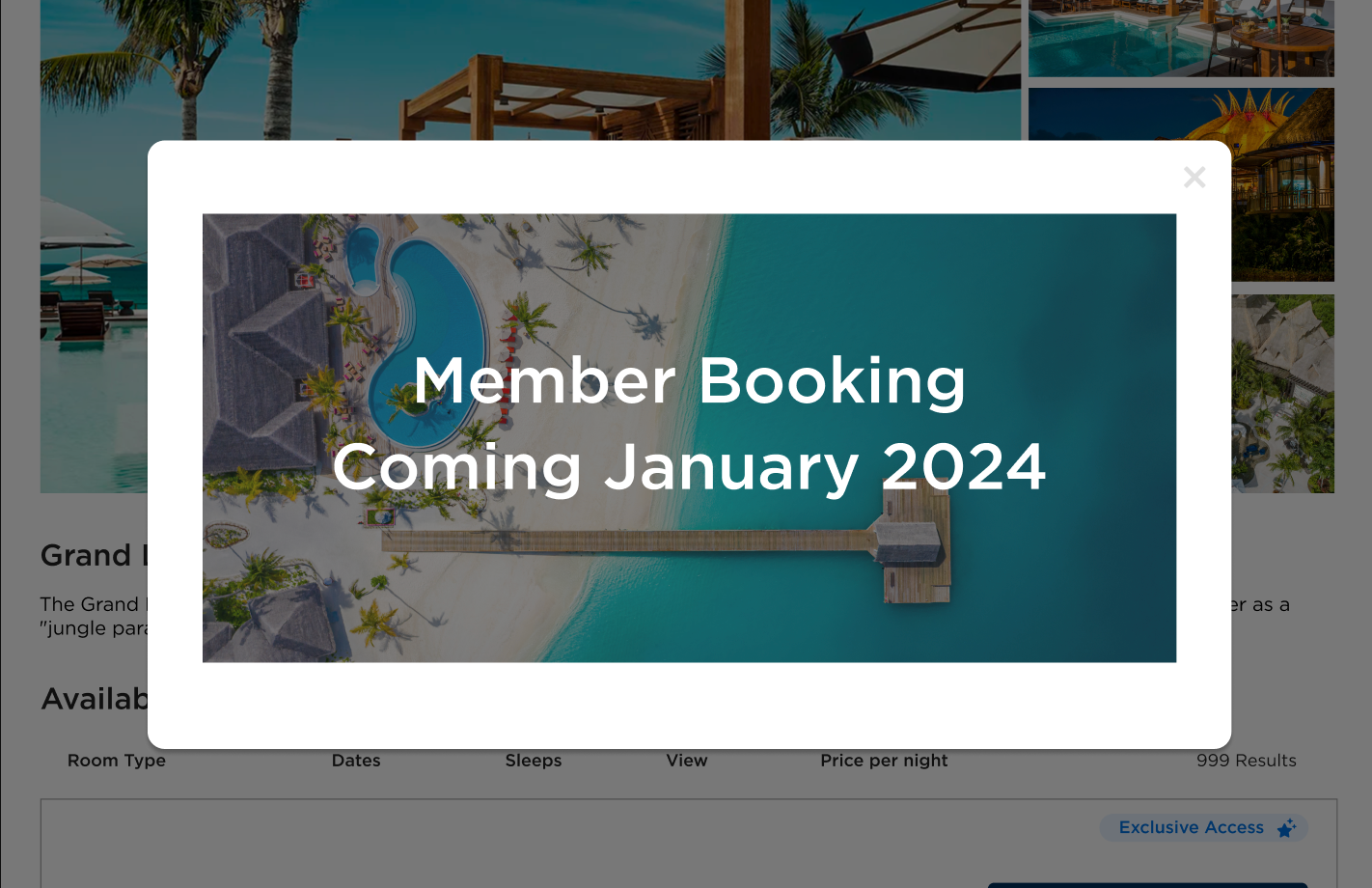
“Coming January 2024!”
As this was a rushed initiative, it was decided to divide the work into a Sales Tool and a Member Booking tool (usable through checkout). The Sales flow had the first few pages of the Member Flow with a notification at the end that Member Booking would be available in January 2024. The Sales team loved it and were able to sell more memberships by selling this new benefit.
Continuous Revisions through Final Flows
While the Sales Flow was being developed, and after it was completed, we continued working on the Member Flow for an MVP Release (Fall 2023) and a Full Release (Q1 2024). Here is a presentation of the prototypes I made, currently in development: